Airports, hotel breakfasts and client dinners don’t have to derail your progress. You don’t need perfect nutrition while travelling, you need a few decisions that work almost anywhere.
You leave home at 5:30AM for the airport.
You’ve got a flight, two meetings when you land and a client dinner that night.
Breakfast becomes coffee.
Lunch becomes whatever you can find between meetings.
By the time dinner arrives, you’re starving.
There’s bread on the table. Wine is being poured. Someone orders dessert.
And somewhere around the second day of the trip, you think:
“I’ll get back on track when I get home.”
This is where most people make travel harder than it needs to be.
The problem isn’t travelling.
It’s trying to follow a health routine designed for a normal week when you’re having anything but a normal week.
If you travel regularly for business, attend conferences or spend a lot of time in hotels, you don’t need stricter rules.
You need fewer decisions.
Here are six that can work almost anywhere.
One of the easiest mistakes is leaving food until later.
You’ll grab something at the airport.
Then traffic is bad.
Security takes longer.
The flight gets delayed.
Your first meeting gets brought forward.
Suddenly it’s 1PM and you’re making food decisions while extremely hungry.
Instead, spend 60 seconds thinking ahead:
When is my next realistic opportunity to eat a proper meal?
If it’s going to be several hours away, eat before you leave or grab something before boarding.
That could be:
It doesn’t have to be the healthiest meal you’ve eaten all week.
It just needs to stop “slightly hungry” becoming “I’ll eat anything.”
Australian Government dietary guidance specifically recommends thinking ahead about what food and drink will be available when eating away from home and considering taking food and water with you. Eat For Health
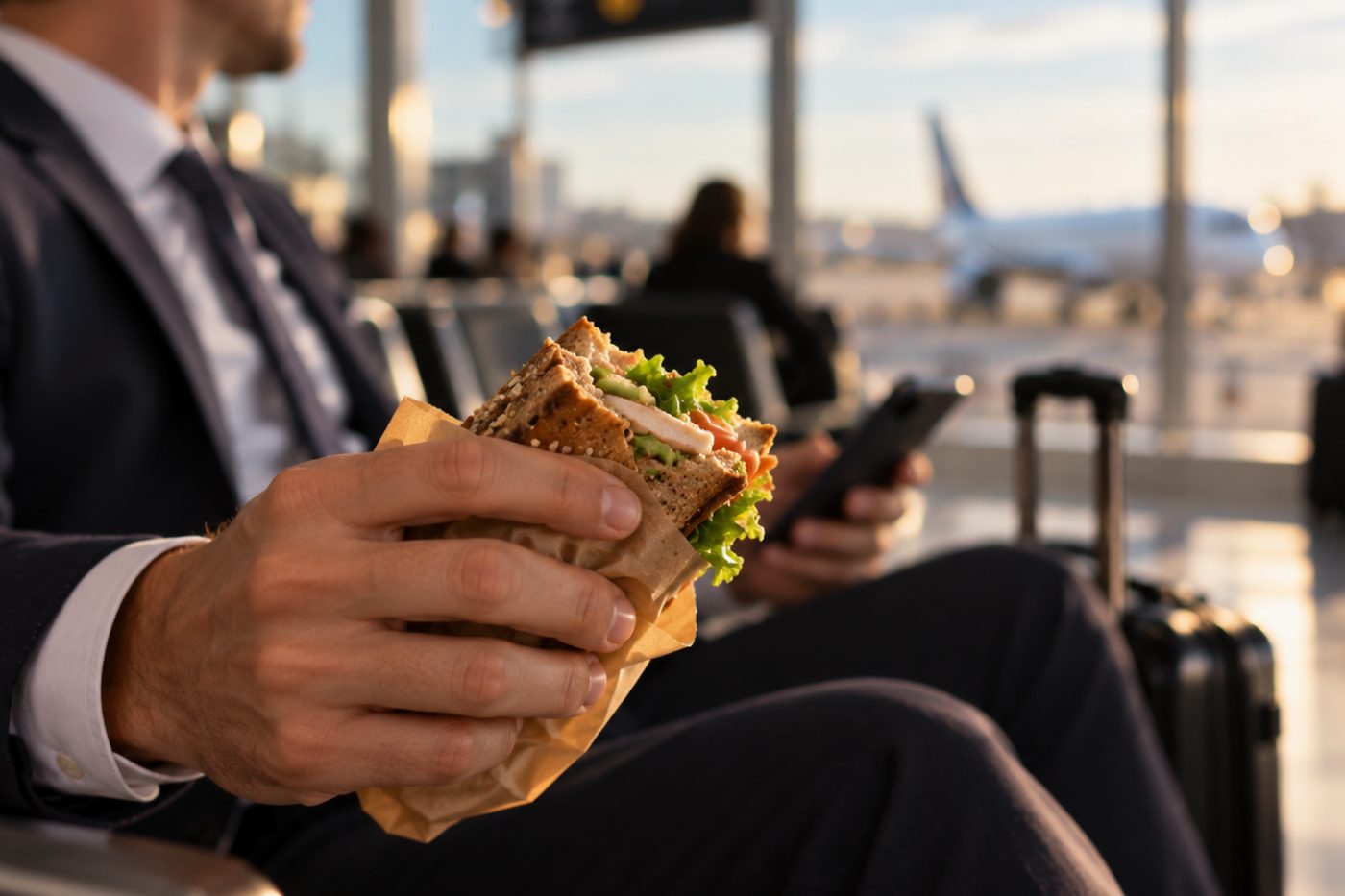
If you fly regularly, there’s no reason to reconsider your entire nutrition strategy every time you walk into an airport.
Create two or three default meals.
Think:
Protein source + something fresh + a sensible main meal + water
For example:
Chicken wrap + fruit + water
Salmon rice bowl + vegetables
Sandwich + yoghurt + water
Salad bowl + chicken + fruit
Your exact choices will depend on the airport.
The important part is that they’re repeatable.
If you regularly fly Sydney to Melbourne, for example, learn where your two reliable options are at the terminals you actually use.
Then food becomes one less decision on a day already filled with decisions.
And if none of your usual options are available?
Eat the best reasonable option you can find and move on.
One airport meal doesn’t define your progress.
You don’t need to become the person carrying a suitcase full of Tupperware through airport security.
But having one emergency option in your work bag can save you when the schedule falls apart.
Consider:
These aren’t supposed to replace every meal.
They’re insurance against:
Delayed flight → missed lunch → 4PM meeting → absolutely starving.
That’s when convenience usually beats good intentions.
A small amount of preparation removes that problem before it happens.
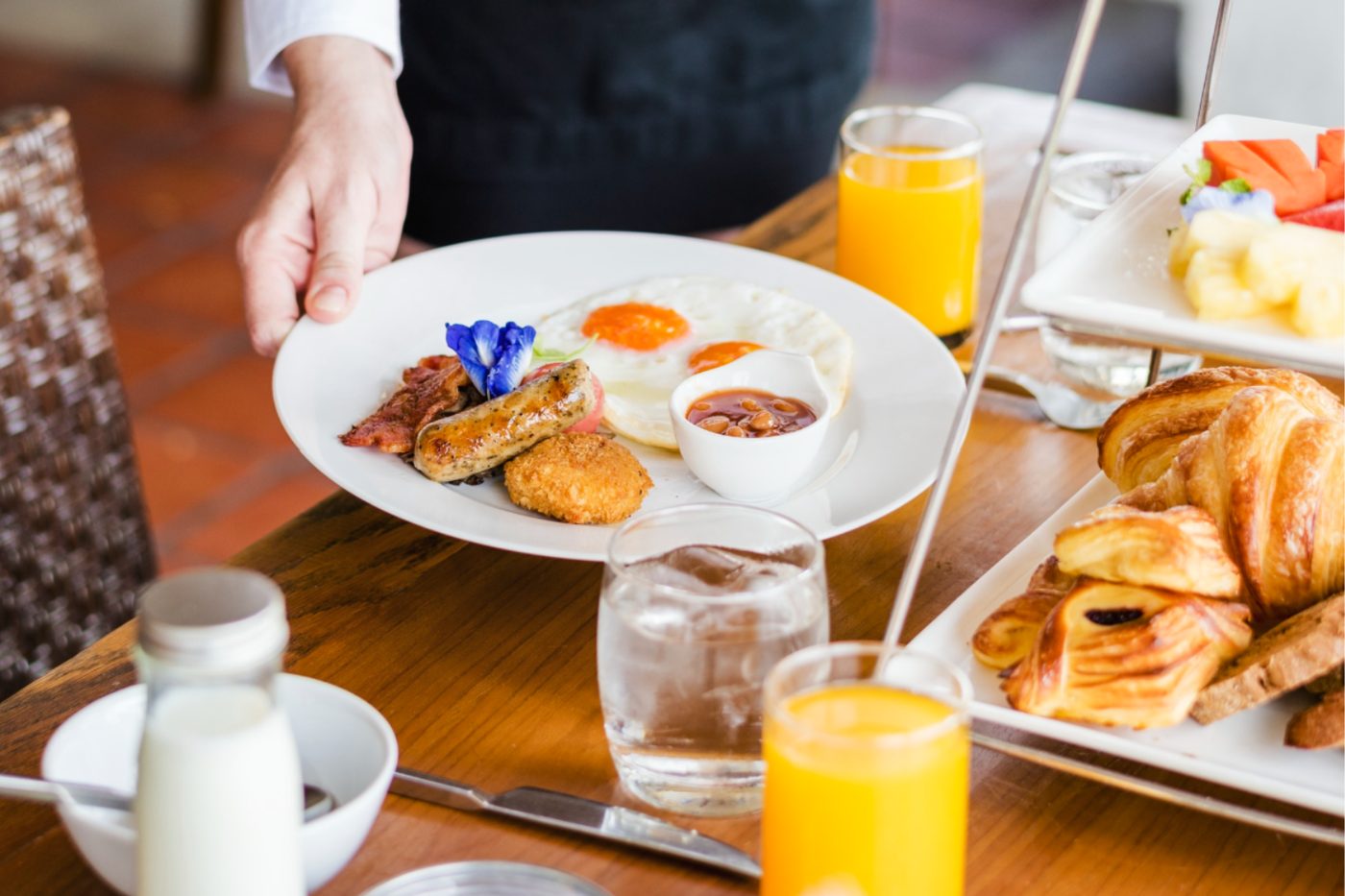
Hotel buffet breakfasts are actually useful.
You’ve usually got plenty of options and more control than you would at an airport.
The problem starts when:
“Breakfast is included” becomes “I need to try everything.”
You don’t need to avoid the buffet.
Build yourself a normal breakfast.
For example:
Eggs + toast + fruit
Greek yoghurt + fruit + oats
Eggs + vegetables + toast
Or whatever combination fits your preferences and goals.
Want the croissant as well?
Have it.
You don’t need to turn one croissant into:
“Well, today is ruined anyway.”
And if breakfast ends up being bigger than usual, don’t punish yourself by skipping lunch.
Just return to your normal eating pattern at the next meal.
Your overall eating pattern matters much more than whether one hotel breakfast was perfect.
This is one of the most important rules for business owners.
You’re at dinner to build a relationship, not demonstrate how disciplined your diet is.
You don’t need to order plain grilled chicken while everyone else enjoys dinner.
Order something you actually want.
A simple approach might be:
Choose your main → include vegetables or salad where practical → enjoy the meal → stop when you’re satisfied.
Steak? Fine.
Fish? Fine.
Pasta? Fine.
Dessert? Also fine.
And if you’re drinking alcohol, it can help to decide before dinner what you’re comfortable drinking rather than making that decision every time somebody tops up your glass.
Australian guidelines recommend that healthy adults drink no more than 10 standard drinks per week and no more than four on any one day to reduce alcohol-related harm. The less alcohol you drink, the lower your risk. NHMRC
Remember that a restaurant serving isn’t necessarily one standard drink. Department of Health
Most importantly:
Don’t let one client dinner become permission to abandon the rest of the trip.
Dinner was dinner.
Breakfast tomorrow is a new decision.
This deserves its own rule because it’s where a lot of people get caught.
You had:
A big dinner.
A couple of wines.
Dessert.
Now it’s 7AM.
The instinct is:
“I’ll skip breakfast and barely eat today to make up for last night.”
You don’t need to.
Return to your normal routine.
Have breakfast if you’re hungry.
Eat a normal lunch.
Drink some water.
Get some movement.
Then continue with your day.
One bigger meal doesn’t require an entire day of punishment.
This is what makes a health strategy sustainable while travelling.
If you’re travelling internationally, there’s another consideration that matters more than calories:
Not getting sick.
Food and water safety varies between destinations.
Before travelling, check Smartraveller for destination-specific advice.
Healthdirect recommends checking whether local tap water is safe. Where it isn’t, precautions include drinking sealed bottled water, avoiding ice, eating fruit you can peel and avoiding uncooked foods such as salads. Health Direct
Sometimes the best health decision isn’t the meal with the fewest calories.
It’s the one least likely to leave you sick in a hotel room before tomorrow’s meeting.
If you’re flying long-haul, nutrition isn’t your only consideration.
Jet lag can cause daytime fatigue and sleep problems, which isn’t ideal when you’ve got a meeting the morning after landing.
Healthdirect recommends staying hydrated, avoiding alcohol and caffeine during flights and, for longer trips, adjusting towards the destination’s eating and sleeping schedule. Health Direct
This is where thinking about performance, rather than simply body weight, becomes useful.
The question isn’t only:
“How many calories am I eating?”
It’s also:
“What will help me arrive ready to perform tomorrow?”
If you remember nothing else from this article, remember:
Know roughly where your next decent meal is coming from.
Carry one option for when flights and meetings don’t go according to plan.
A bigger meal doesn’t mean the trip is ruined.
Return to normal at the next opportunity.
That’s it.
Before you leave home, answer five questions:
What are my two default meal options?
What’s my backup if my schedule changes?
Where can I get a decent meal when I arrive?
What’s my plan around alcohol?
What can I do tonight that will help me perform well tomorrow?
This should take a few minutes.
And that’s the point.
A good system should reduce the amount of time you spend thinking about your health, not increase it.
Travelling doesn’t mean choosing between enjoying yourself and making progress.
You can eat airport food.
You can enjoy the hotel buffet.
You can go to the client dinner.
You can have a glass of wine.
The difference is having a few important decisions made before you’re tired, hungry and rushing between meetings.
For a business owner, that’s the real goal:
less decision fatigue, more consistency.
Because the best health plan isn’t one that only works when you’re at home, your fridge is stocked and your calendar is empty.
It’s one that still works when you’re 10,000 kilometres away and tomorrow starts with an 8AM meeting.
That’s how we approach health at The Ultimate Health Project: building simple systems around your business, travel, family and real life, not asking you to put everything else on hold to get healthy.
Want a health and performance plan that works wherever business takes you?
Insights only go so far. A personalised program, built around your life, is what actually moves the needle. Book a free consultation and find out what that looks like for you.